September 23, 2025
Flexible dentures are considered more comfortable to wear than traditional dentures because of their soft construction. Traditional dentures, usually made from plastics, tend to be more rigid. Flexible dentures are more bendable and tend to conform better to the shape of the mouth. Many wearers prefer the natural look and soft texture of flexible dentures over traditional dentures.
Even though flexible dentures are considered more comfortable, they may not be suitable for everyone. There are many factors that go into determining which dentures are best for a candidate, which include the stability, durability, fit, and cost. To know if flexible dentures are truly the best choice for you, learn more about them below.
What are Flexible Dentures?
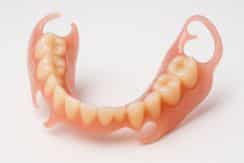
Flexible dentures are a type of partial denture designed to replace one or more missing teeth. Their defining feature is the soft build made from advanced thermoplastic materials. Unlike traditional dentures, which have a hard framework, flexible dentures are pliable and soft, offering more comfort to wearers.
While this type of denture can replace multiple teeth, flexible builds are more often offered as partial dentures. Their snug fit adapts easily to the natural contours of the mouth, providing an excellent solution for bridging dental gaps without much discomfort. These dentures are supported by nearby natural teeth. Therefore, they are not typically recommended to treat all missing teeth (medically known as complete edentulism).
The Advantages of Flexible Dentures
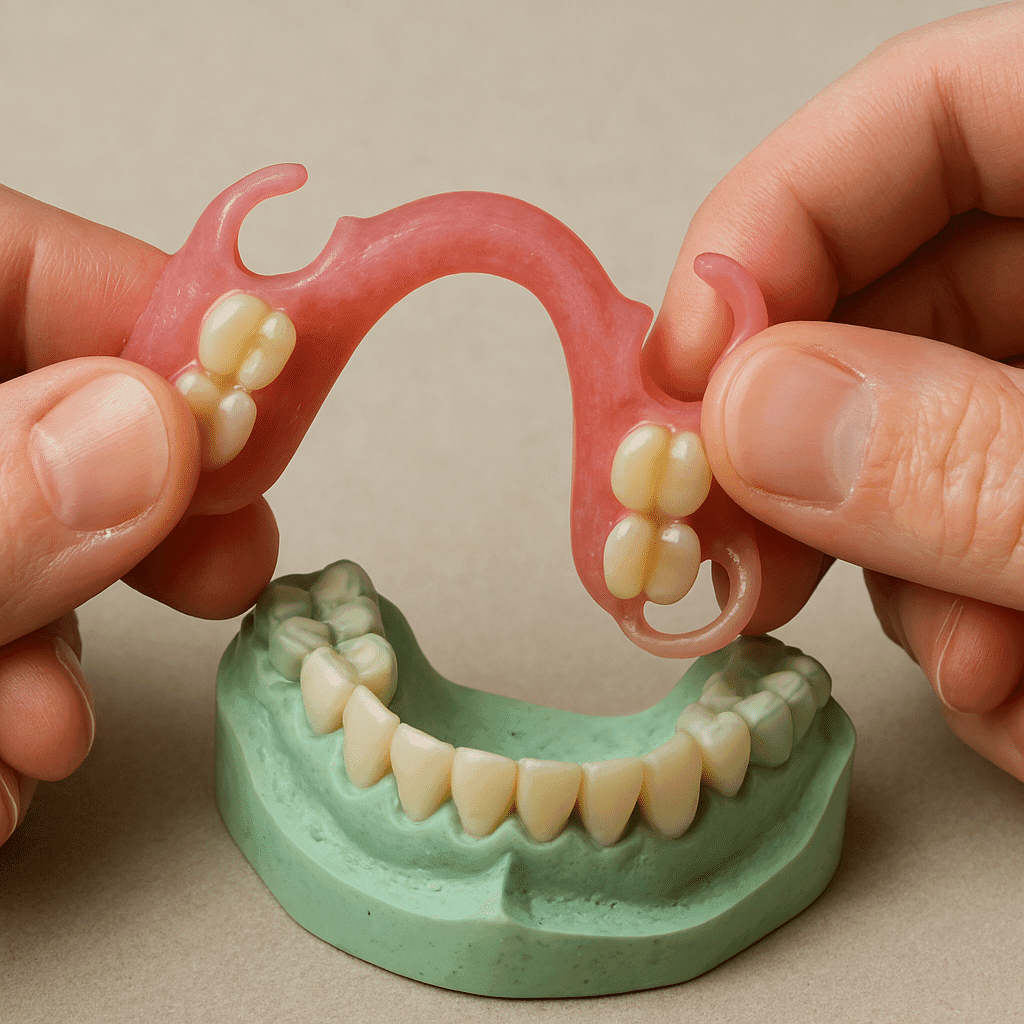
- Superior Comfort: The biggest upside of flexible dentures is the increased comfort compared to traditional dentures. The soft, bendable base material conforms smoothly around the gums and minimises the risk of irritation and soreness.
- Discreet and Natural Appearance: The translucent, gum-coloured resin facilitates unobtrusive looks when wearing flexible dentures. Most wearers report better confidence in wearing flexible dentures in social settings rather than rigid dentures.
- Lightweight and Less Bulky: Flexible dentures tend to be thinner and lighter than acrylic or metal dentures, making them considerably more comfortable and discreet to wear.
- No Metal Components: Flexible dentures are always made without metals, making them perfect for those with metal allergies.
- Resistant to Breaking: While traditional dentures tend to be brittle, flexible dentures are pliable and very unlikely to crack or fracture due to accidents.
- Secure Fit: The pliable bodies of flexible dentures allow for a reliable fit in most cases.
- Easier to Adapt to: There is an adaptation period for all dentures, but most people adapt to flexible dentures more quickly compared to other types.
- No Need for Glue: Thanks for the enhanced fit of these dentures; you will not need to use adhesives with flexible dentures.
- Faster Production: In most cases, flexible dentures are quicker to mould than traditional dentures. It is unlikely you will need to come in for multiple fittings to get the fit right.
The Downsides of Flexible Dentures
- Not suited for use as a complete denture to replace all missing teeth
- Requires meticulous cleaning to prevent bacterial buildup
- Cleaning requires special care to avoid scratches and similar damage
- Difficult to adjust or repair when needed
- Doesn’t last long as metal dentures
- May not offer the same stability as metal dentures
- More costly compared to traditional dentures
- More costly compared to traditional dentures
- Typically not available on the NHS
What are Flexible Dentures Made of?
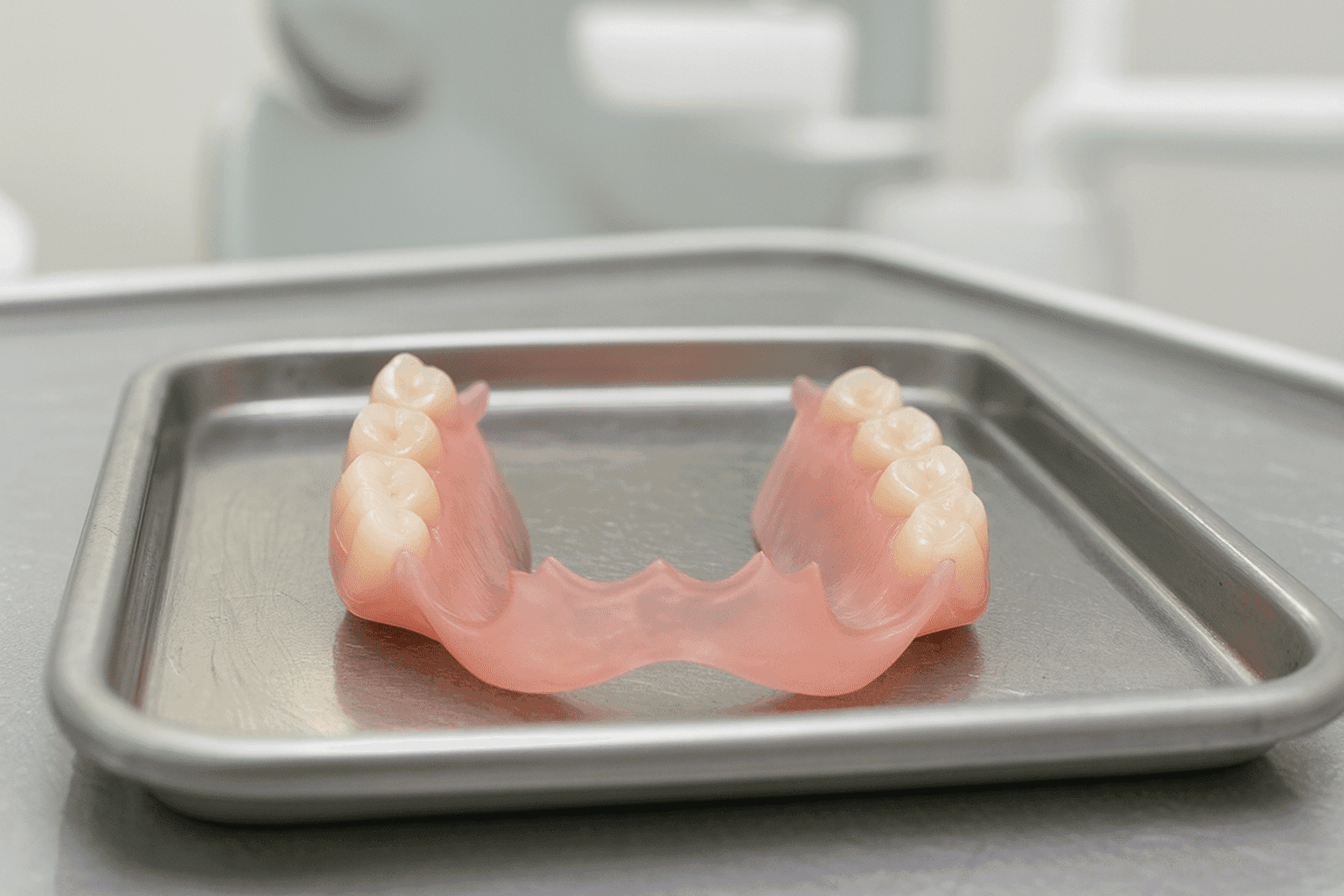
Flexible dentures are primarily made from thermoplastic resins which are a type of plastic that becomes pliable when heated. The most commonly used thermoplastic material for these types of dentures is medical-grade nylon, also known as polyamide.
Both flexible and traditional dentures are made from plastics, but they differ significantly in the types of plastics used. Traditional dentures are usually made from acrylic (polymethyl methacrylate or PMMA), which tends to be rigid after being cooled. On the other hand, medical-grade nylon is softer and pliable after being heated and cooled.
Other notable materials flexible dentures are made of include polyesters, polyacetals, and PEEK (polyether ether ketone). However, these materials are rarely used in dentures made in the UK, as nylon is far more widely used.
Key Properties of Flexible Denture Material:
- Flexible: Thermoplastic resins are softer than acrylic, so flexible dentures can bend and adjust to the shape of the mouth without breaking.
- Hypoallergenic: The medical-grade nylon is non-allergenic and is not known to cause irritation. Therefore, flexible dentures are suitable for those with allergies or similar sensitivities to acrylic or metals in traditional dentures.
- Natural appearance: Thermoplastic resins are semi-translucent. So the denture base can be easily colour matched with the wearer’s gums, allowing for a lifelike appearance without visible metal clasps.
- Less likely to break: Polyamides are resilient and more ductile, meaning they resist pressure and impact better than acrylics, which are more brittle. This lessens the likelihood of flexible dentures breaking if dropped or bent.
Flexible Dentures Vs Traditional Dentures
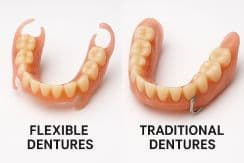
| Feature | Flexible Dentures | Traditional Dentures |
|---|---|---|
| Material | Thermoplastic nylon/polyamide (most common) | Acrylic resin sometimes with metal (chrome) clasps or framework |
| Rigidity | Flexible, soft and bendable | Rigid and inflexible |
| Comfort | Excellent—Adapts to contours of gums, unlikely to irritate | Moderate to low—Bulky fit, sometimes may cause soreness |
| Appearance | Gum-coloured base that looks natural | Gum-coloured base but may have visible metal clasps |
| Durability | Resilient and ductile | Brittle, may crack when dropped |
| Fit | Easy to fit because of flexibility | Requires precise moulding and possibly multiple fittings |
| Staining | Susceptible to staining | Moderate susceptibility, easier to repolish as needed |
| Allergy Risk | Hypoallergenic materials | Some may contain allergenic metals |
| Repairability | Difficult to adjust or repair once damaged | Easy to repair or adjust as needed |
| Cost | Generally more expensive | Typically more affordable |
| Longevity | Typically 5-8 years | Typically 5-10 years or more with repairs |
The Similarities
Flexible and traditional dentures do share some similarities despite having different builds. Let’s take a look:
- Both are removable oral appliances for replacing missing teeth and fixing gaps.
- Both can restore chewing function, improve speech, and prevent facial muscle sagging due to tooth loss.
- Both require regular cleaning.
- Both are customised to meet individual needs and are available in a wide range of colours, shapes, and sizes.
- Both require occasional dental review for proper functioning.
- Both demand an initial adaptation period, even though flexible dentures are more comfortable.
Who Can Wear Flexible Dentures?
While flexible dentures are popular, they are not for everyone. Ideal candidates include:
The Ideal Candidates:
- Those with partial tooth loss (typically 1–6 teeth missing in an arch). Dentists also require candidates to have at least a few healthy and stable teeth to function as anchors for the flexible dentures.
- Those seeking metal-free or hypoallergenic dentures. An especially good option for those allergic to acrylic or cobalt-chromium.
- Those with sensitive or delicate gum tissue. If traditional dentures cause too much gum irritation or soreness, flexible dentures may be a good option.
- Those with dental anatomical issues. Recommended in cases where traditional dentures are not possible because of teeth with significant undercuts, tilt, irregular bone ridges, or limited mouth opening (microstomia).
- Those who require an interim or immediate partial denture following a dental procedure. Flexible dentures can be used as a relatively comfortable stop-gap measure after extractions or dental implant surgery.
- Those seeking a better aesthetic appearance. If you want more natural-looking dentures, either due to personal preferences or job requirements, flexible dentures are recommended over traditional dentures.
Unsuitable Candidates:
- Those with complete or near-complete tooth loss. Flexible dentures are typically used as partial dentures and are therefore not recommended for those who require full dentures.
- Those with active gum or periodontal disease. Usually, the gum disease should be stabilised before receiving flexible dentures.
- Those with very low jawbone density. As flexible dentures are supported by nearby teeth, severe jawbone loss may cause stability issues.
- Those with bruxism (teeth grinding in sleep). The pliable build of flexible dentures is more likely to wear out if you have a chronic tooth grinding problem. As these can’t be repaired, dentists don’t recommend flexible dentures for those with bruxism or similar conditions.
- Those who require future modifications. If your dental situation is likely to undergo changes in the near future, traditional dentures will be more suited as they are easy to adjust. Flexible dentures will need to be remade every time a modification is needed.
Don’t consider the above lists as a definitive eligibility guide for receiving flexible dentures. A proper medical evaluation by a dental professional is crucial to determine your suitability for this type of denture.
How to Get Flexible Dentures
In the UK, only private dental clinics offer flexible dentures as standard treatment. NHS coverage is typically limited to acrylic and metal dentures. Therefore, if you are specifically looking for flexible dentures, you will need to consult with a private dentist.
Step 1: The Initial Consultation
The process begins with an initial consultation to determine your suitability for flexible dentures. The dentist will evaluate your oral health, medical history, and condition of remaining teeth, among other factors, before prescribing flexible dentures.
Step 2: Getting Dental Impressions and Designing the Dentures
If you are eligible, the dentist will take detailed impressions of your mouth using a mould and scans. This step can usually be done in the same appointment as the initial consultation. The dentist will also take your aesthetic preferences into consideration when designing the flexible dentures.
Step 3: Wax Model Try-in and Laboratory Moulding
Afterwards, you will be called in to do a try-in using a wax model that is prepared similarly to the final model of the dentures. The dentist will assess your comfort while wearing the wax model to determine if adjustments are necessary. If this step goes well, the design will be sent to a dental lab to mould your final flexible dentures.
Step 4: The Fitting Appointment
After a week or two of waiting (this may depend), you will be asked to visit for a fitting appointment. You can try the final design and see how it fits. If it fits well, the dentist will provide you with instructions on care and adapting to your new teeth.
Step 5: Final Check-up
Finally, you will be called in for a check-up a week or two after the first sitting. The dentist will check how well you are adapting to the new dentures and address any concerns you may have.
To make your flexible denture treatment plan quick and pain-free, contact Complete Smiles. We offer high-quality thermoplastic dentures with payment plans that make the treatment affordable. You can discuss your options, finances, and eligibility with a qualified dentist at any of our clinics in Harrow, Stafford, or Bournemouth. Give a call for more information.
To make your flexible denture treatment plan quick and pain-free, contact Complete Smiles. We offer high-quality thermoplastic dentures with payment plans that make the treatment affordable. You can discuss your options, finances, and eligibility with a qualified dentist at any of our clinics in Harrow, Stafford or Bournemouth. Give a call for more information.

Dr. Malavi Sivakanesan (292322)
Dr. Malavi Sivakanesan is the principal dentist and co-founder at Complete Smiles in Harrow, Greater London. She is responsible for establishing the Complete Smiles brand throughout the United Kingdom and Europe and has 5 successful practices under her strong leadership.